

AI-assisted results are now a regular part of search in Australia. As of July 2026, Google held about 88.22% of the Australian search market, compared with 8.74% for Bing and 1.61% for Yahoo. Changes to Google’s results can therefore affect how quickly local stores are discovered. Australia Post reports that Australians spent AUD $82.6 billion online in 2025, equal to roughly 24% of total retail spending.
For Shopify and Shopify Plus merchants, the useful question is not whether AI answers matter. It is what has changed, what you can measure, and how to assess whether an SEO partner understands both.
What changed in Australian search, with dates
- May 20, 2025: AI Overviews were available in more than 200 countries and territories and over 40 languages.
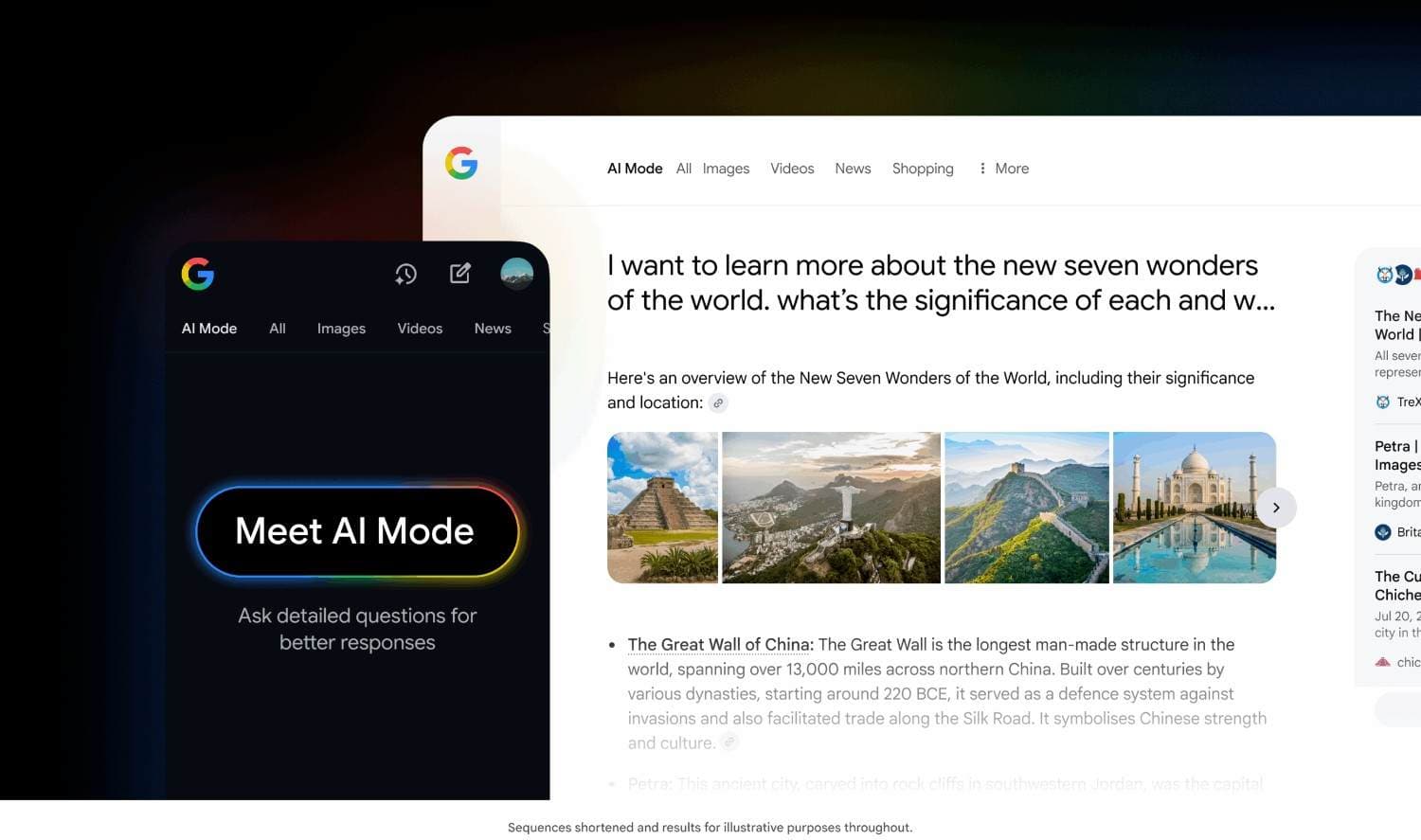
- October 8, 2025: Google began rolling out AI Mode to Australians, adding a conversational experience alongside conventional search results.
- January 27, 2026: Google made Gemini 3 the default model for AI Overviews and enabled follow-up questions that move users from an overview into AI Mode.
- June 3, 2026: Generative AI performance reports became available in Search Console.
More questions can now be answered near the top of the results page, although AI experiences still link to external sites. Google began testing inline links within AI Overviews in August 2024 and reported that its link display changes increased publisher traffic. It says AI responses use retrieved web information and display prominent, clickable links.

What this means for product and collection pages
Terms such as answer engine optimisation and generative engine optimisation are often used to describe this work, but Google generally treats it as part of SEO. The core requirements remain familiar. Pages need to be crawlable and indexable, content should answer genuine customer questions, and structured data must match the information shoppers can see. For a practical implementation sequence, consult the Shopify SEO checklist.
For Shopify stores, several areas deserve attention:
- Product detail pages: Include original photography, accurate specifications, sizing information, materials, shipping details, and return terms. Manage variants carefully so near-identical URLs do not compete with one another.
- Collection pages: Treat collections as useful category hubs. Add concise introductions, sensible filters, wording that reflects how Australians describe the category, and internal links to relevant subcategories.
- Structured data: Product, price, availability, and review markup should match the rendered page. Do not mark up information that shoppers cannot verify.
- Feeds and profiles: Keep Merchant Center data accurate. Retailers with physical locations should also maintain current Business Profile details, which Google identifies as relevant to ecommerce and local visibility in AI features.
What to measure now
Search Console’s Generative AI performance reports show impressions for AI Overviews and AI Mode, with breakdowns by page, country, and device. Because click and click-through rate data is limited, use the report as a visibility signal rather than a direct revenue report. Google also notes that traffic from AI features is included in Search Console’s overall web performance data.
A practical monthly process is to export AI-feature impressions by URL and compare them with conventional search performance for the same pages. Review both sets of data alongside commercial measures such as revenue by landing page, assisted conversions, and branded search volume. Assistant-level visibility sits outside Search Console entirely, so pair the report with manual prompt testing of how businesses get recommended by AI assistants in Australia

How to choose an ecommerce SEO partner in Australia
Choosing an ecommerce SEO agency in the AI Overviews era is less about terminology and more about evidence. Six criteria are worth assessing:

- Platform experience. Look for demonstrated Shopify or Shopify Plus work, including collection architecture, variant handling, and performance issues caused by apps.
- AI search monitoring. Ask for a clear process that combines Search Console’s Generative AI reports with controlled manual prompt testing.
- Feed management. Confirm who is responsible for Merchant Center data quality rather than assuming it sits within on-page SEO work.
- Migration safety. Request a written process covering replatforming, redirects, testing, and staged releases.
- Transparent methods. The provider should be willing to explain its content and link practices in plain language.
- Commercial reporting. Reports should connect visibility with orders, revenue, and, where possible, margin.
If you are comparing managed providers, ask an Australian SEO agency such as First Page to explain how it handles AI search monitoring, Merchant Center feed maintenance, and site migrations before you sign an agreement. First Page promotes a pay-on-performance model under which a client does not pay if agreed targets are not met within the engagement period. It also offers content optimisation for surfaces such as Google AI Overviews and other AI assistants.
Review the contract carefully. First Page’s terms limit guarantees and state that SEO is not warranted to increase sales, traffic, or profits. Conditions and exclusions apply. Similar limits are common in SEO agreements, but you should still clarify how targets are defined, what evidence is used, and what happens when performance falls short.
Where this leaves merchants
AI Overviews and AI Mode change the layout and user journey more than they change the foundations of SEO. Crawlable, accurate, and genuinely helpful pages still matter. Product data quality remains important, and AI-feature impressions add a new layer to performance reporting. Focus on those areas and choose a partner that can explain its methods, responsibilities, and results.
FAQ
Does AI search eliminate organic traffic opportunities for ecommerce?
No, but it can change how users reach a store. Google’s AI responses include clickable source links, while shoppers still need product details and reliable merchant information before buying. The practical response is to improve product content, maintain accurate feeds, and track both visibility and commercial results.