

What is bespoke web design, and how does it differ from templates?
Bespoke web design means building a website entirely from scratch, coded and crafted specifically for one business, one audience, and one set of goals. Nothing is borrowed from a pre-made theme or a drag-and-drop template library. Every layout decision, every feature, and every line of code exists because your business needs it.

The contrast with template-based design is stark. A template forces your business to work within someone else’s structure. You adjust your content to fit the mould, not the other way around. With a custom website design, the mould is built around you. The result is a site that looks, feels, and performs in a way no off-the-shelf theme can replicate.
Bespoke web development delivers several advantages that templates structurally cannot offer:
- Full IP ownership: you own every line of code, with no vendor lock-in or licensing dependency
- Unique branding: the visual identity is yours alone, not shared across thousands of other sites using the same theme
- Tailored functionality: features are built to match your actual workflows, not adapted from generic plugins
- Superior performance: custom-coded sites achieve Core Web Vitals scores of 90 or above, which template-heavy builds rarely sustain
- Enhanced security: no reliance on third-party plugins means a smaller attack surface and fewer vulnerabilities
- Long-term flexibility: the codebase grows with your business rather than hitting the ceiling of a platform’s feature set
For businesses with specific operational needs or a genuine point of difference to protect, bespoke web design is the only approach that preserves that difference online.
Table of Contents
- When does bespoke web design actually make sense for your business?
- How does the bespoke web design process work, step by step?
- What does bespoke web design actually cost?
- Why CantyDigital is a strong choice for bespoke web design in Australia
- What are the common challenges of bespoke web design?
- How to choose a bespoke web design provider
- CantyDigital builds bespoke websites that work harder for your business
- Key takeaways
When does bespoke web design actually make sense for your business?
Bespoke web development suits businesses at a stage where their website needs to do more than look presentable. If your site needs to handle complex workflows, integrate with internal systems, or carry a brand identity that genuinely sets you apart, a template will hold you back within months.
The clearest signals that bespoke is the right call:
- You need custom functionality that no standard plugin covers cleanly
- Your business processes require tight integration with third-party tools or databases
- You are in a competitive market where a generic-looking site actively costs you credibility
- You are planning for growth and need a codebase that scales without a rebuild
- You have a budget that reflects the investment: bespoke budgets generally begin at £15,000 and are suited for businesses with complex needs, while template solutions typically cost between £1,000 and £10,000.
Templates are genuinely the right choice for some situations. A startup testing a concept, a sole trader needing a simple brochure site, or a business with a tight launch deadline and a modest budget will often get better value from a well-configured template. The mistake is using a template when your business has outgrown what one can deliver.
Pro Tip: Before committing to either path, map out every feature your site needs to perform in the next three years. If more than two or three of those features require custom development anyway, bespoke will almost certainly cost less in total than a template plus ongoing workarounds.

How does the bespoke web design process work, step by step?
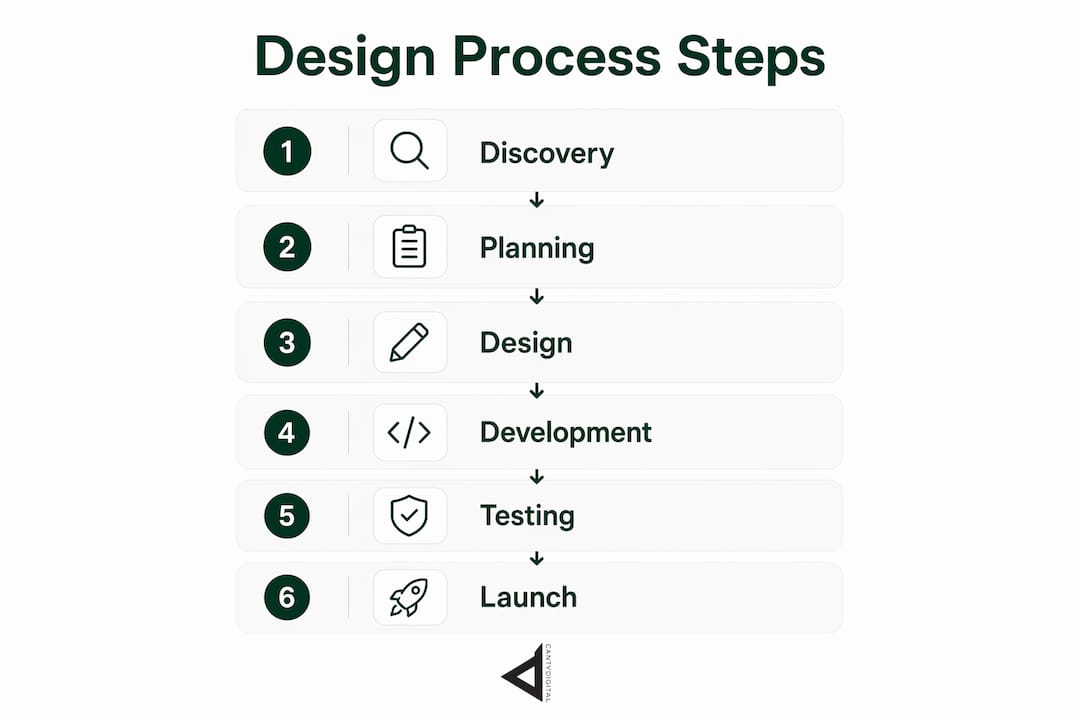
A well-run bespoke project follows a clear sequence. Each phase builds on the last, and the quality of the outcome depends heavily on how thoroughly the early stages are done.
-
Discovery and research: the agency works with you to understand your business goals, target audience, competitor positioning, and technical requirements. This phase produces a detailed brief that drives every decision that follows.
-
Strategy and architecture: information architecture, user journey mapping, and technical scoping happen here. The site structure is planned before a single visual is created.
-
Design mockups and prototyping: designers produce wireframes and then high-fidelity visual mockups. You review and provide feedback before development begins, which prevents expensive rework later.
-
Front-end development: the approved designs are coded into responsive, accessible HTML, CSS, and JavaScript. Performance and cross-device compatibility are built in from the start, not bolted on afterwards.
-
Back-end development: databases, content management systems, APIs, and any custom logic are built and integrated. This is where bespoke functionality, such as booking systems, member portals, or e-commerce logic, comes to life.
-
Testing and quality assurance: the site is tested across browsers, devices, and screen sizes. Performance, security, and accessibility are checked against defined benchmarks.
-
Revisions and sign-off: feedback from testing is addressed, and the client reviews the final build before launch approval is given.
-
Deployment and launch: the site goes live on your hosting environment, with DNS configuration, SSL setup, and performance monitoring put in place.
-
Post-launch support: a reputable agency provides a defined support period after launch, covering bug fixes, performance checks, and any early adjustments.
The bespoke design process is iterative throughout. Feedback loops between client and agency at each phase keep the project aligned with the original brief and prevent scope drift.
What does bespoke web design actually cost?
Cost is where bespoke web design requires honest conversation. The upfront investment is higher than a template, and there is no point pretending otherwise. What changes the equation is the total cost over time.
Template solutions carry ongoing costs that accumulate: licensing fees, premium plugin subscriptions, developer time to manage plugin conflicts, and the eventual cost of a rebuild when the template hits its limits. Bespoke development avoids most of those recurring expenses because the codebase is yours and built to last.
Common cost components in a bespoke project:
- Discovery and strategy: scoping, research, and planning
- UX and UI design: wireframes, visual design, and prototyping
- Front-end and back-end development: the core build
- Integrations: connecting to CRMs, payment gateways, booking systems, or APIs
- Testing and quality assurance: cross-device and performance testing
- Content migration: moving existing content to the new site
- Ongoing maintenance: hosting, security updates, and support retainers
Hidden costs to watch for include scope creep from poorly defined briefs, additional rounds of design revisions beyond what the contract covers, and integration complexity that was not scoped upfront. A detailed discovery phase is the best protection against all three.
Budget reality check: template-based sites typically cost much less upfront than bespoke projects, which scale with complexity. For Australian businesses, the equivalent investment in AUD will vary by agency and scope.
The lower total cost of ownership argument for bespoke is real, but it requires a long enough time horizon. Businesses planning to use their site for five or more years, and who need it to perform at a high level throughout, will generally find the maths favours bespoke.
Why CantyDigital is a strong choice for bespoke web design in Australia
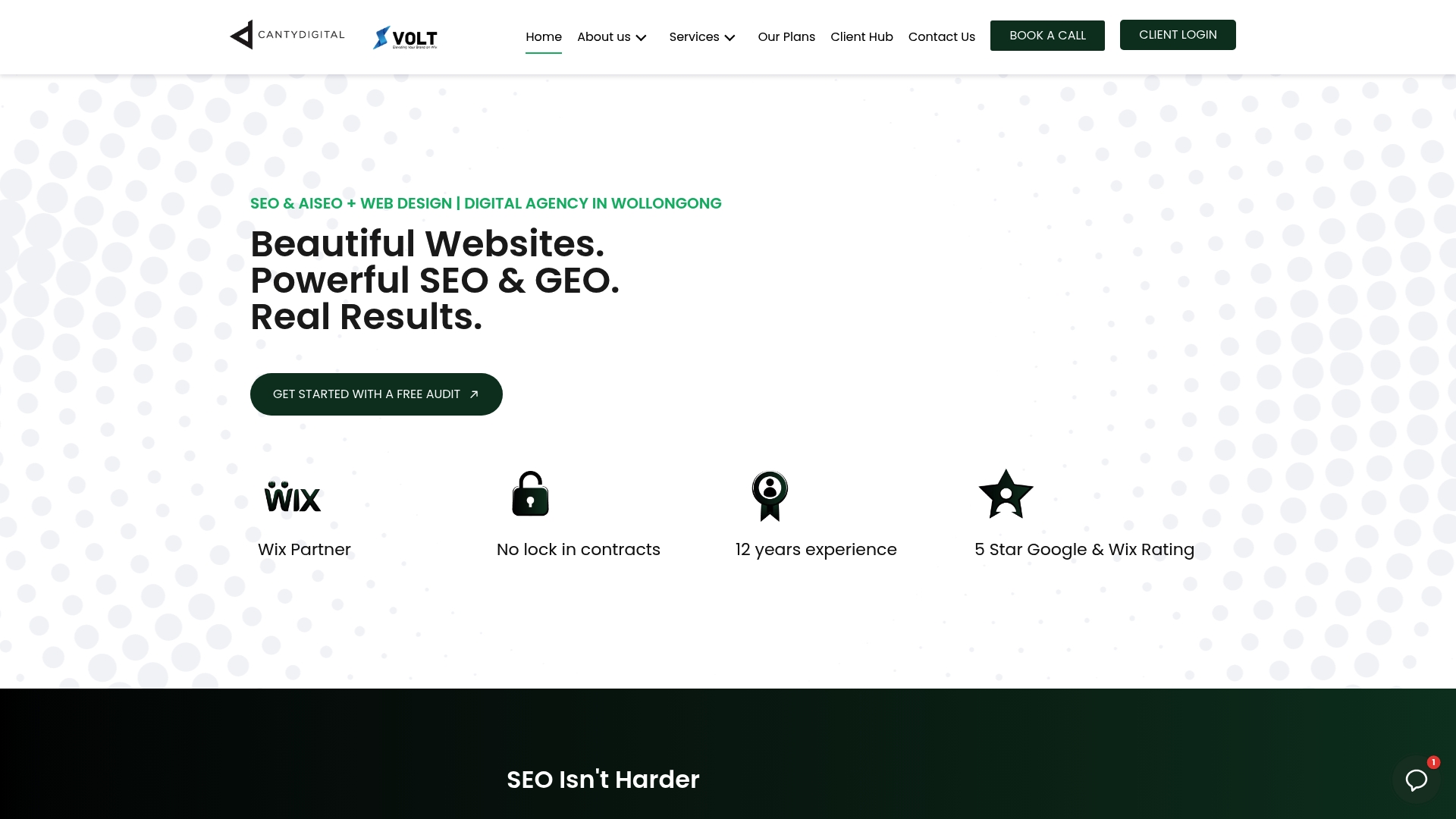
CantyDigital is a Wollongong-based digital agency with 12 years of experience building high-performance websites for Australian businesses. The team combines custom web design with modern SEO built for both traditional search engines and AI-driven platforms.
What sets CantyDigital apart for bespoke projects:
- Performance-first builds: every website is built with Core Web Vitals scores of 90 or above as a baseline, not an afterthought
- SEO and AI search compatibility: sites are structured for LLM visibility from day one, which matters as AI-driven search continues to grow
- No lock-in contracts: flexible arrangements mean you are not tied to a long-term commitment if your needs change
- 5-star Wix Partner status: recognised expertise in building and configuring sites that perform at a high level
- Full-service capability: web design, SEO, press release distribution, and outreach automation under one roof means your site and its authority grow together
For businesses across New South Wales and beyond, CantyDigital’s approach to personalised website solutions is grounded in measurable outcomes rather than aesthetic-only thinking.
What are the common challenges of bespoke web design?
Bespoke web design is not without its difficulties. Understanding them upfront helps you manage the process and set realistic expectations.
Higher upfront cost is the most obvious barrier. For businesses with limited capital or a short runway, the investment required for a quality bespoke build can be prohibitive, and a template may genuinely be the better starting point.
Longer timelines are the trade-off for custom work. A well-executed bespoke project typically takes three to six months from discovery to launch, sometimes longer for complex builds. If you need a site live in four weeks, bespoke is not the answer.
Dependency on the right agency is a real risk. A bespoke site is only as good as the team that built it. Poor documentation, unclear code, or an agency that disappears post-launch can leave you with a site that is difficult and expensive to maintain or hand over to another developer.
Scope creep derails more bespoke projects than any technical challenge. When the brief is vague or stakeholders keep adding features mid-build, timelines and budgets blow out. A thorough discovery phase and a clearly scoped contract are the only reliable defences.
Maintenance responsibility shifts more squarely to you and your agency. Unlike a template platform that pushes updates automatically, a custom codebase requires active management to stay secure and current. That said, bespoke sites avoid the plugin conflict problems that plague template-based builds, where a single update can break multiple site functions simultaneously.
How to choose a bespoke web design provider
The agency you choose will shape the outcome more than any other single factor. A few evaluation criteria cut through the noise.
Review their portfolio with a critical eye. Look for projects similar in complexity to yours, not just visually impressive work. Ask how those sites perform technically, not just how they look.
Ask about their discovery process. An agency that skips or rushes discovery is one that will build the wrong thing confidently. A thorough brief-taking process is a sign of professional maturity.
Understand who actually does the work. Some agencies outsource development offshore while presenting a local face. Know whether your project will be handled in-house or subcontracted, and what quality controls apply either way.
Check contract terms carefully. Confirm IP ownership transfers to you on completion, that the contract defines revision rounds clearly, and that post-launch support is specified rather than implied. CantyDigital’s web design FAQs cover many of these contract and process questions in plain language.
Ask for references from past clients. A confident agency will connect you with previous clients without hesitation. Conversations with those clients will tell you more than any case study.
Questions worth asking any prospective provider:
- What does your discovery process involve, and how long does it take?
- Who owns the code and all assets on project completion?
- How do you handle scope changes during the build?
- What does post-launch support look like, and what does it cost?
- Can you show me the Core Web Vitals scores for sites you have built?
The right provider will answer all of these without deflecting. If a question about IP ownership or post-launch support produces a vague response, treat that as a signal.
CantyDigital builds bespoke websites that work harder for your business
Most agencies will build you a website. CantyDigital builds one that ranks, converts, and holds its performance over time. The difference is that every site comes with SEO and AI search compatibility baked in from the architecture stage, not added as an afterthought once the design is done.
For Australian businesses ready to move beyond template limitations, CantyDigital offers custom web design with no lock-in contracts, a 12-year track record, and a team that treats your site’s search performance as part of the brief from day one. Whether you are in Wollongong, across New South Wales, or anywhere in Australia, the process starts with a conversation about what your site actually needs to do. Get your questions answered and see what a purpose-built site looks like by visiting the CantyDigital website design FAQs.
Key takeaways
Bespoke web design delivers superior performance, full IP ownership, and long-term flexibility that template-based sites structurally cannot match, making it the right investment for businesses with complex needs and a growth horizon beyond two years.
| Point | Details |
|---|---|
| Bespoke means built from scratch | Every feature, layout, and line of code is created specifically for your business, with no template constraints. |
| Bespoke projects require a higher upfront investment than templates, which typically cost £1,000–£10,000, while bespoke budgets usually start at £15,000 and increase with complexity. | |
| Process runs discovery to launch | A quality bespoke build follows nine defined phases, from research and strategy through to post-launch support. |
| Challenges require active management | Longer timelines, scope creep, and maintenance responsibility are real trade-offs that a clear contract and thorough brief can mitigate. |
| CantyDigital for Australian businesses | CantyDigital offers 12 years of bespoke web design experience, no lock-in contracts, and performance-first builds optimised for modern search. |